

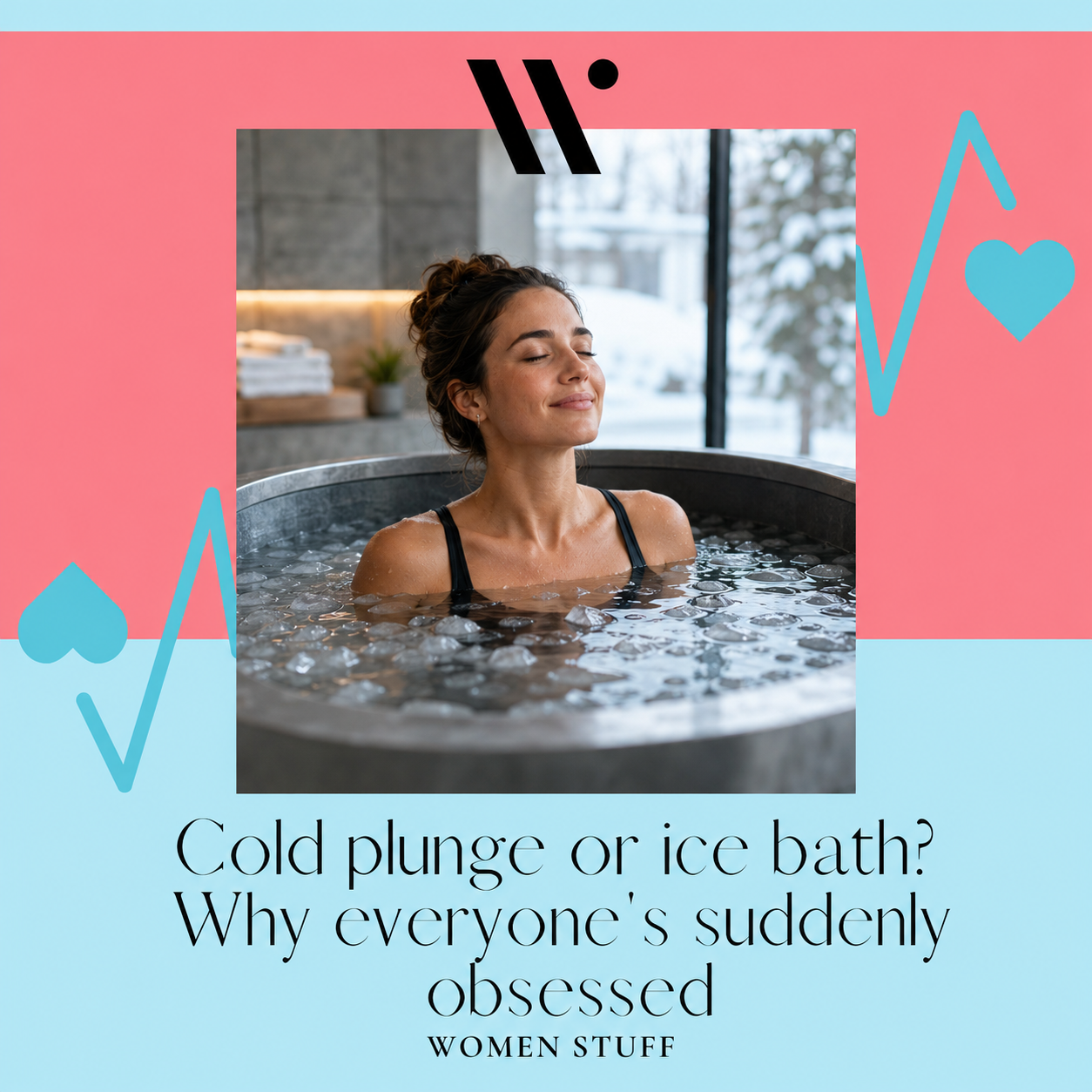
Cold plunge or ice bath? Why everyone’s suddenly obsessed
The first time someone told me to willingly get into freezing cold water for “wellness”, I laughed at them. Then I did it anyway, made a noise I’m not proud of, and came out the other side feeling weirdly amazing. Which is annoying, because now I’m one of those people.
Quick note before we go any further: “cold plunge” and “ice bath” basically mean the same thing. Most researchers class it as full-body immersion in water at 15 degrees or colder, whether that’s a fancy barrel, a bathtub full of ice or the ocean in July. Either way, it’s gone from a niche thing elite athletes did to recover, to something you’ll now find on spa menus, in gym locker rooms and in a lot of very committed people’s backyards (hello, expensive plastic barrels). But does it actually do anything, or is it just an excuse to buy activewear and post about it? Turns out, it’s a bit of both.
The actual cold plunge benefits (and the catch)
Here’s the honest bit, the science is still catching up. Abig systematic review published in PLOS One in January 2025, done by researchers at the University of South Australia, pulled together 11 studies and more than 3,000 people. It found cold water immersion was linked to lower stress in the 12 hours after you get out, plus better sleep, small but real wins if stress relief is what you’re after. People who did short cold showers, as little as 30 to 90 seconds, for a month also said their overall quality of life went up a bit.
Interesting twist though, the same review found cold exposure actually spikes inflammation in your body straight after and for about an hour on. Researchers reckon this is just your body’s short-term stress response, a bit like how a hard workout causes some damage before your muscles come back stronger. It’s part of why athletes are so big on cold bath recovery after training.
The researchers were pretty upfront that we still don’t know the “perfect” temperature, time or frequency for things like stress, sleep or mental health, and there just isn’t enough solid research yet. Their advice, which is worth listening to, is that cold water immersion looks safe and probably beneficial for healthy adults. If you’ve got a heart condition, high blood pressure, diabetes or circulation issues though, check with your doctor first.
It’s not exactly a new idea
If cold plunging feels like the latest wellness fad, plot twist, it’s actually ancient. The Romans built entire rooms just for this. Their public bathhouses had thefrigidarium, a cold pool bathers moved to after the heat of the caldarium, because they believed switching between hot and cold boosted circulation and vitality.
Nordic countries never really stopped either. In Finland it’s calledavanto, a hot sauna followed by a plunge into an icy lake, basically a hot and cold plunge on repeat, and it’s still a normal Tuesday for a lot of Finns. Over in Japan, the Shinto practice ofmisogi involves standing under freezing waterfalls or dunking yourself in cold rivers as a form of spiritual cleansing, which also turns up in the hot-to-cold sequences you get in onsen culture.
So really, ice baths at the gym and cold plunge pools at fancy day spas are just a modern remix of something humans have been doing on purpose for thousands of years.
Where I first tried it
You don’t need a barrel in the backyard to give this a go, by the way. Plenty of council pools and ocean baths will give you a free, salty version if you’re happy to brave open water, and more day spas are offering a cold plunge pool as its own treatment or as part of a bigger sauna and cold plunge circuit.
My own first proper cold plunge was atAlba Thermal Springs & Spa, a geothermal bathing spot out at Fingal on the Mornington Peninsula, about an hour from Melbourne. I’d spent the afternoon working my way through their naturally hot pools (the water comes from an aquifer more than 500 metres underground, which is wild to think about) before making my way up to The Hemisphere, an elevated part of the property with sweeping views over the peninsula. That’s where the cold plunge lives, right next to a semi-enclosed geothermal pool, a steam room and a sauna. What I didn’t expect was that the plunge isn’t just tap water. Alba actuallycools the same mineral-rich geothermal water used everywhere else on site, so it still has all those natural minerals. Worth knowing though, it’s not chilled down to genuine ice-bath temperatures, it sits at a regular, unheated temperature rather than icy. Going straight from a warm soak into that still felt properly cold by contrast, enough to make you gasp and reset, but never unbearable. By the time I climbed back out I got what everyone was on about.
If it’s your first time, something like Alba’s version, cold but not full ice-bath cold, with warm water always close by, is a much gentler way in than diving straight into a proper ice bath solo.
Quick heads up before you jump in
None of this is medical advice, obviously, and cold plunging isn’t for everyone. If you’re pregnant, have a heart condition, high blood pressure or poor circulation, chat to your doctor before trying it. If you’re a total beginner, most people start with somewhere around 30 seconds to a couple of minutes and build up from there, there’s no medal for going longer on your first go. Ease in slowly, keep it short, and let your breathing settle before deciding whether you’re a convert or never doing that again.
Either way, you’ll be in good company. People have been doing this on purpose for thousands of years, we’ve just added better marketing.
Post a Comment